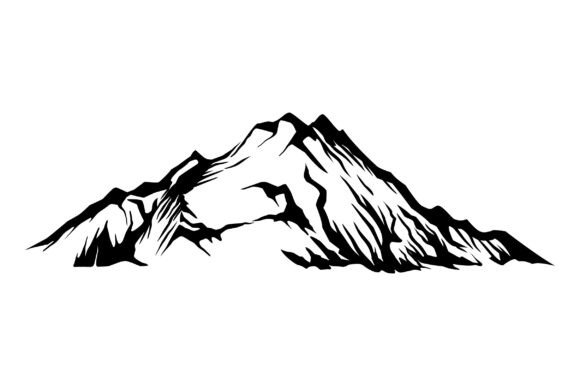
Mountain Range Element: A Strategic Asset for Visual Communication
In the crowded landscape of digital design and branding, the choice of visual assets often dictates the perceived professionalism of a project. The Mountain Range Element, specifically rendered as a monochrome rocky mountain hand drawing on a white background, offers more than just aesthetic appeal; it provides a versatile foundation for strategic visual communication. This specific illustration style—clean, editable, and high-resolution—serves as a critical tool for entrepreneurs, marketers, and creators who need to convey stability, growth, and natural resilience without overwhelming their core message.
When integrating a Mountain Range Element into a design workflow, the objective is not merely decoration but intentional positioning. Whether used in web page layouts, blog headers, or physical print materials, this vector template allows for scalability that raster images cannot match. The ability to open, edit, and resize these files without losing quality ensures that your brand maintains its integrity across every touchpoint, from a small social media icon to a large-scale billboard.
The Strategic Value of Monochrome Illustrations
Why choose a monochrome mountain illustration over a full-color photograph? The answer lies in focus and adaptability. In strategic design, less is often more. A black-and-white or grayscale Mountain Range Element removes the distraction of color, forcing the viewer's eye to engage with the composition, typography, and layout rather than competing visual stimuli. This makes it an ideal choice for minimalist branding strategies where clarity is paramount.
For professionals managing multiple projects, the efficiency gained by using a single, high-quality vector asset is significant. Unlike complex photographic backgrounds that require heavy optimization for web performance, a hand-drawn vector file is lightweight yet crisp. This directly impacts site speed and user experience (UX), two factors that search engines prioritize when ranking content. By utilizing a Mountain Range Element in SVG or EPS10 formats, you ensure that your digital presence loads quickly while retaining sharp edges on high-density displays.
Furthermore, the "hand-drawn" aspect introduces a human element that resonates with audiences seeking authenticity. In an era dominated by AI-generated perfection and stock photography, a sketch-style mountain range suggests craftsmanship and organic growth. This subtle psychological cue can enhance trust, particularly for brands in the outdoor, wellness, education, or consulting sectors where human connection is a key differentiator.
Scalability and Format Versatility
A primary advantage of this specific Mountain Range Element set is the inclusion of diverse file formats: JPG, PNG, EPS10, and SVG. Each format serves a distinct strategic purpose within a broader operational plan:
- Sigma (SVG) Files: Essential for web development. These are resolution-independent, meaning they look perfect on any screen size. They are ideal for responsive design elements, icons, and interactive animations.
- EPS10 Files: The industry standard for professional printing. If your strategy involves physical collateral like business cards, brochures, or t-shirt designs, the EPS format ensures that the vector data remains editable by professional graphic software, allowing for precise color adjustments and scaling.
- PNG Files: Best for digital overlays requiring transparency. These allow you to place the Mountain Range Element over various colored backgrounds without a white box interfering with the design.
- JPG Files: Useful for quick previews, email marketing campaigns, and social media posts where file size is a constraint.
Having access to all these formats in one download streamlines the production process. It eliminates the bottleneck of converting files between programs, reducing the time from concept to execution. For freelancers and small business owners, this efficiency translates directly into cost savings and faster turnaround times for clients.
Integrating Mountain Elements into Brand Identity
To use the Mountain Range Element effectively, one must align the visual with the brand's core narrative. Mountains universally symbolize challenges overcome, stability, and the journey toward a goal. However, the application of this symbol requires context. Placing a rugged mountain illustration next to a luxury fashion brand might create cognitive dissonance unless the brand story explicitly connects to nature or adventure. Conversely, for a financial advisory firm, the same image can subtly communicate long-term planning and solid foundations.
Consider the following use cases where this element adds tangible value:
- Corporate Positioning: Use the monochrome outline as a watermark or footer element in reports and presentations. It reinforces the idea of structure and reliability without dominating the text.
- Product Design: For apparel businesses, the vector nature of the Mountain Range Element makes it perfect for t-shirt designs. The clean lines translate well onto fabric, and the lack of intricate shading reduces printing costs while maintaining a stylish look.
- Digital Content: Bloggers and publishers can use the illustration as section dividers or header graphics. Because it is on a white background, it integrates seamlessly into existing content management systems (CMS) without requiring complex editing.
- DIY and Craft Projects: Hobbyists can utilize the high-resolution files for scrapbooking, greeting cards, or custom signage. The editable nature of the vector files allows for personalization, adding unique touches that mass-produced items lack.
Decision-Making Framework for Visual Assets
Before committing to a specific visual direction, decision-makers should evaluate the alignment between the asset and their long-term goals. Ask yourself: Does this Mountain Range Element support the message I am trying to convey? Is the level of detail appropriate for the medium?
For instance, if the goal is to drive immediate action through a call-to-action button, a busy background might detract from the conversion rate. In such cases, a simplified version of the mountain illustration, perhaps reduced to a single line icon, would be more effective. The versatility of the provided vector files allows you to strip away details or add complexity based on the specific needs of the campaign.
It is also crucial to consider the audience's expectations. A tech startup targeting young innovators might prefer a more abstract interpretation of the mountain, whereas a traditional non-profit focused on conservation might benefit from the detailed, rocky texture of the hand drawing. Understanding these nuances ensures that the visual asset acts as a bridge to the audience rather than a barrier.
Risks of Indiscriminate Usage
While the Mountain Range Element is a powerful tool, it carries risks if used without clear intent. One common pitfall is "visual clutter." Adding decorative elements simply because they are available can dilute the primary message. If a webpage already contains dense text and multiple images, introducing a large mountain illustration may overwhelm the user and increase bounce rates.
Another risk lies in the lack of consistency. Using different styles of mountains across various platforms—such as a photorealistic peak on Instagram and a hand-drawn sketch on the website—can confuse customers about the brand's identity. Consistency builds recognition. Therefore, once you decide to adopt the monochrome hand-drawn style, it should be applied uniformly across all touchpoints to reinforce brand recall.
Furthermore, relying solely on generic imagery without customization can make a brand appear impersonal. Even though the Mountain Range Element comes in editable vector formats, there is a temptation to use the default settings. To truly leverage the asset, designers should tweak the scale, opacity, or orientation to fit the specific layout. Customization signals effort and attention to detail, qualities that audiences associate with high-quality service and products.
Long-Term Planning and Operational Efficiency
From an operational standpoint, investing in high-quality, multi-format vector templates is a forward-thinking strategy. It future-proofs your design assets. As technology evolves and display resolutions increase, having source files in EPS and SVG ensures that your graphics remain relevant and sharp. You avoid the costly and time-consuming process of recreating assets years down the line.
For teams working collaboratively, the standardized nature of these files facilitates smoother workflows. Designers, developers, and marketers can all access the same source material, ensuring that the final output matches the original vision. This reduces miscommunication and rework, leading to higher productivity and better resource allocation.
Ultimately, the Mountain Range Element is more than a picture; it is a component of a larger strategic ecosystem. When selected and applied with intention, it enhances communication, strengthens brand identity, and supports the overarching goals of the organization. By understanding the capabilities of vector technology and the psychological impact of monochrome illustrations, professionals can make informed decisions that yield measurable results.
Whether you are launching a new product, refreshing a corporate identity, or creating engaging content for a blog, the thoughtful integration of this design element can provide the structural support needed to elevate your work. Remember, the most effective designs are those that serve a purpose, guide the viewer, and stand the test of time. With the right tools and a strategic mindset, the Mountain Range Element becomes a cornerstone of your visual success.